The Weight of a Key
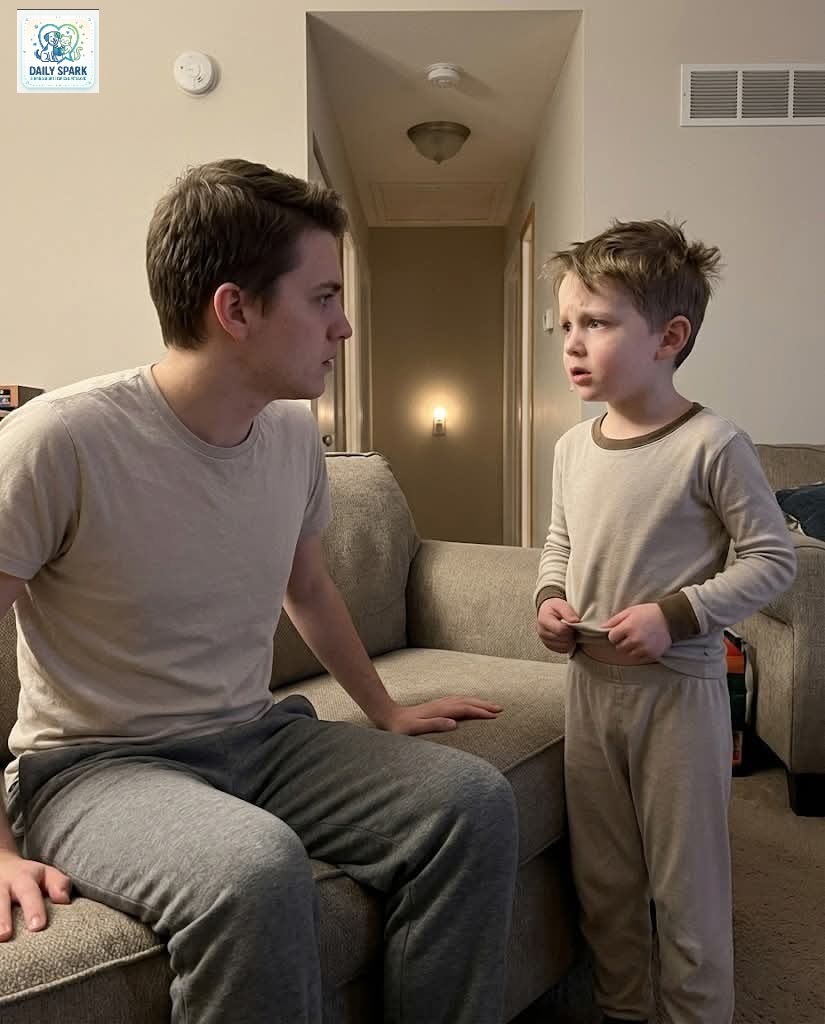
My sister begged me to watch her son for one night. At 2 a.m., the little boy woke me up and whispered, “Please don’t let Mommy come back yet.”
The couch spring creaked when I sat up. A small night-light from the hallway caught his face, and I could see he was gripping the hem of his pajama shirt with both hands.
I asked, “Did something happen?”
He shook his head.
“Did Mommy hurt you?”
Another shake.
Then he said, “I don’t want to go home and be by myself again.”
That landed harder than anything I’d expected.
I brought him a glass of water and sat on the kitchen floor beside him instead of pushing for answers. After a minute, I asked what “again” meant.
He held up three fingers.
Three nights the week before, he said, his mom had put dinner in the fridge, charged an old phone, locked the door, and told him she would be back after he was asleep.
She had left the hallway light on. She had told him not to answer the door. She had told him to call if there was an emergency. She had never asked whether he was scared.
He wasn’t trying to get his mother in trouble. That was the part that got me. Every few sentences, he defended her.
“Mommy’s tired.”
“Mommy needs money.”
“Mommy said big kids can stay by themselves.”
Then he looked down and added, “She said you’d be mad at her if you knew.”
I felt anger rise, but anger wasn’t what he needed from me. So I asked one question.
“What do you want me to do when she comes back?”
He thought about it for a long time.
“Make her listen before she makes me leave.”
At 5:41 that morning, my sister texted that she was on her way.
My nephew immediately got dressed.
He put on the same jeans he’d worn the day before, zipped his hoodie all the way up, and carried his backpack into the kitchen. He didn’t eat. He kept checking the front window whenever headlights crossed the wall.
When my sister finally came through the door, she had a paper coffee cup in one hand and an exhausted smile that disappeared only because she saw the two of us already waiting at the table.
“What’s going on?” she asked.
I didn’t accuse her. I didn’t raise my voice.
I asked, “How many nights did you leave him home alone last week?”
She stopped halfway to the counter.
Her first words were not, “I didn’t.”
They were, “He told you?”
There it was.
I said, “He told me he was scared.”
My sister set the coffee down hard enough for the lid to jump. She said I didn’t understand what things had been like. She said she had bills stacked on the counter, groceries getting more expensive, and hours she couldn’t afford to lose.
“I left him food. I left him a phone. The door was locked.”
My nephew stared at the tabletop.
She said, “It was three nights. I hated it. I was trying to keep us afloat.”
I believed that she hated it.
I also believed the little boy beside me, who had been afraid enough to wake another adult at 2 a.m. and beg for more time before his mother came back.
My sister reached for his backpack.
He pulled it away.
“Come on,” she said, softer now. “We’re going home.”
He looked at me. Then at her.
Then he opened the front pocket of his backpack, pulled out the spare key to their apartment, crossed the kitchen, and pressed it into my hand.
The New Ending
The small piece of metal felt ice-cold against my palm.
My sister froze. Her eyes locked onto the key resting in my hand, and for a long, heavy moment, the room went entirely silent. The defensive edge in her posture melted away, replaced by a sudden, devastating stillness.
”What are you doing?” she asked, her voice barely a whisper.
My nephew didn’t look up. He just stepped behind me, gripping the back of my shirt the exact same way he had held his pajamas at 2 a.m.
”He’s not trying to punish you,” I said gently, looking my sister in the eyes. “He’s giving me a way in, because he knows he can’t carry this alone anymore. And neither can you.”
She swallowed hard, her eyes brimming with tears she had clearly been holding back for months. The anger, the pride, the sheer exhaustion—it all crumbled at once. She sank onto the kitchen chair opposite us and covered her face with her hands.
”I didn’t know what else to do,” she sobbed softly. “I was so close to losing the apartment. I thought… I thought if I just worked the extra night shifts for a couple of weeks, we’d be safe. I thought he was sleeping through it.”
I walked over, kept one hand on my nephew’s shoulder, and placed the other on hers.
”You don’t have to choose between keeping a roof over his head and keeping him safe,” I told her firmly. “Pride isn’t worth his peace of mind. From now on, whenever you work late, he stays here. No excuses. No doing this in secret.”
She looked up, her face red and wet with tears, then looked down at her son.
”I’m sorry,” she whispered to him, extending her hand. “I’m so sorry I made you feel like you had to be brave all by yourself.”
My nephew took a deep breath. Slowly, he unclipped his backpack, dropped it to the floor, and walked over to wrap his arms around her neck. She held him tightly, burying her face in his shoulder.
I looked down at the spare key still in my palm. I didn’t give it back. I slipped it onto my own keychain instead—a permanent promise that from that day forward, the door between us would always remain unlocked.


Leave a Reply