My mom called and told me I had 48 hours to move out of my inherited house because it now “belonged” to my sister, so I stayed quiet, gathered my legal documents, and when they showed up, the police were already there.
I was leaving work at Boston Housing Court when my phone rang.
“You have forty-eight hours to clear out your things,” my mother said, her voice cold. “That house is Stephanie’s now.”
No greeting. No explanation. Just a decision she expected me to accept without question.
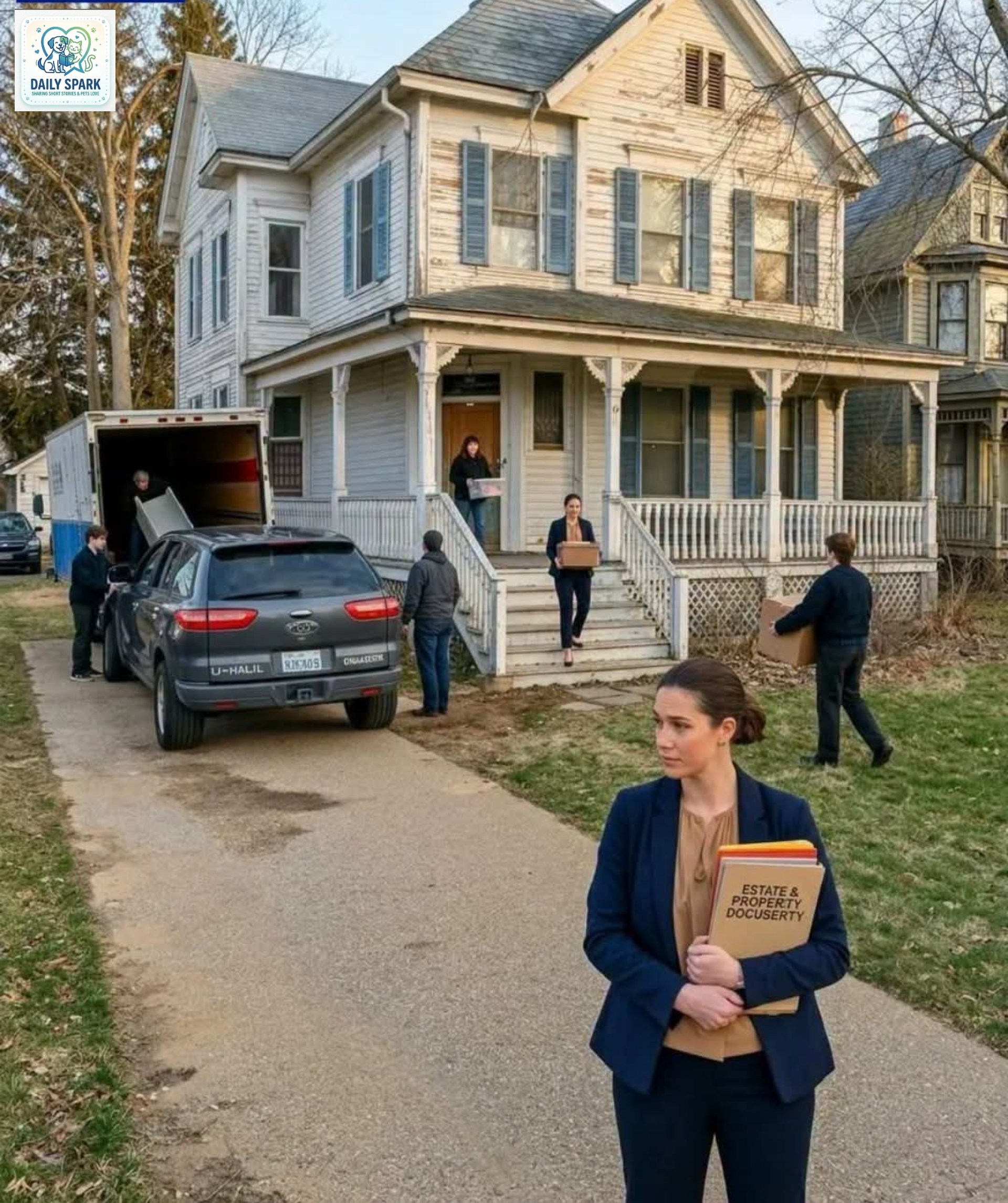
The house had belonged to my grandmother Elaine—the one with blue shutters, a wraparound porch, and rosebushes she pretended to hate every spring. She had practically raised me while my parents focused on appearances and status. Elaine taught me how to manage money, read contracts carefully, and stand my ground without making noise.
So when she left me the house in her will, I wasn’t surprised.
Devastated to lose her, yes. Shocked, no.
The will was clear. The house was mine. No conditions. No shared ownership. Nothing vague for my mother or sister to twist into something else.
My parents hated that right away. Stephanie hated it even more. She had spent her whole life treating other people’s belongings like obstacles between her and what she wanted.
I didn’t argue with my mother.
I simply said, “Okay.”
Then I went home, opened my file box, and laid every document across my dining table: the deed, the will, probate records, tax papers, insurance—everything proving ownership beyond question. If they wanted to turn it into a power move, I would treat it like a case.
A colleague who handled estate disputes gave me one piece of advice:
“Don’t let them inside. Not even for a second.”
Saturday morning, I drove to Elaine’s house and packed the things that mattered most first—photo albums, recipe cards, letters, jewelry, and a framed picture of us laughing on the porch, covered in blue paint.
Then I handled everything else.
I changed what needed to be changed, set up cameras, notified the right people, and stopped responding to my family entirely.
That silence seemed to bother them the most.
Stephanie texted asking when she could “come measure for curtains.” My father emailed about “doing what’s right for the family.” My mother left voicemails claiming I was putting everyone in an impossible position.
I answered none of it.
Sunday morning, my security alert went off.
A moving truck had pulled up behind my mother’s SUV.
Stephanie stepped out first, confident, keys already in her hand like the house belonged to her. My mother followed behind with that familiar expression—the one she used when she convinced herself that control was the same as being right.
I was already inside, watching through the blinds.
Stephanie walked up to the front door and confidently pushed her key into the lock.
It didn’t work.
She tried again, harder this time.
Then a police car slowly pulled up to the curb.
Stephanie froze.
Two officers stepped out calmly while the movers suddenly looked a lot less certain about being there.
That’s when I opened the front door from inside and stepped onto the driveway, a folder tucked under my arm.
My mother immediately switched to her polite, practiced tone.
“Oh, good,” she said brightly. “Now we can sort this out.”
I didn’t respond to her. I looked at the officer instead.
“Are you the property owner?” he asked.
“Yes,” I said, holding out my paperwork.
Stephanie laughed sharply. “Owner? Please. Grandma fixed this before she passed.”
Then she pulled out her own folded document, holding it up like it proved everything.
The officer took both sets of papers.
He looked through my probate documents.
Then he unfolded Stephanie’s page. Then he checked the date.
And asked the one question my mother clearly never expected to hear.
“Ma’am… where did you get this?”
Stephanie crossed her arms, tossing her blonde hair over her shoulder. “From my attorney. It’s an amended deed. My grandmother clearly made a mistake in her original will, so our family lawyer updated it to reflect her true intentions. The house belongs to me now.”
The officer didn’t blink. He turned the single sheet of paper over, checking the stamp at the bottom, and then looked directly at my mother.
“Did your mother sign this in front of a notary public?”
My mother’s confident smile faltered for a fraction of a second. “Well, she was elderly, and her health was declining rapidly toward the end. It was handled through family counsel.”
“That’s not an answer,” the officer said firmly. “This document is dated three days after your mother passed away. Furthermore, it bears no valid notary seal, no probate court filing number, and no signature from the executor of the estate.”
The air in the driveway went dead silent.
The movers, who had been leaning against the side of their massive truck listening intently, immediately stepped away from the tailgate and began murmuring among themselves.
Stephanie’s face drained of color. “That’s impossible. Our lawyer said—”
“Your lawyer helped you commit corporate and real estate fraud,” I interrupted, stepping forward and opening my folder. I handed a crisp, sealed document to the second officer. “This is the official Letters Testamentary issued by the Boston Probate Court, naming me as the sole legal owner and executor of Elaine Vance’s estate. Any other document claiming otherwise is a fabrication.”
The second officer scanned my papers, nodded approvingly, and handed them back. He then turned his attention to my mother and sister.
“Alright, let’s get one thing straight,” the officer said, his voice dropping into an authoritative register that brooked no argument. “You are currently standing on private property with a fraudulent deed attempting an unlawful eviction and trespass. If you do not move your vehicle and leave this premises right now, you will be facing criminal charges.”
My mother tried to step forward, her voice rising in panic. “Officer, you don’t understand! We are her family! She’s my daughter, she’s stealing—”
“She is the legal homeowner, and you are trespassing,” the officer cut her off sharply. “Move the SUV. Now.”
Stephanie looked like she was about to burst into tears of pure rage. She glared at me with absolute venom, her mouth opening and closing as she searched for words that wouldn’t come. Finally, realizing the police weren’t going to entertain their entitlement, she turned on her heel, wrenched the passenger door of the SUV open, and climbed inside.
My mother gave me one last look—a look filled with the bitter realization that her intimidation tactics had completely imploded—before hurrying around to the driver’s side.
The movers didn’t wait for instructions. They climbed back into their truck, put it in reverse, and backed out of the driveway without a single word.
As my mother’s SUV sped down the street, tires spitting gravel, the police officers gave me a polite nod and returned to their cruiser.
I stood alone on the wraparound porch for a long moment, listening to the wind rustling through the rosebushes by the front steps. The blue shutters caught the morning sun, shining bright and clear against the white wood.
Later that evening, my phone buzzed with an email from a local bar association ethics committee, to whom I had already forwarded copies of the fraudulent deed along with the lawyer’s letterhead. My family had spent years believing that manipulation and forged signatures could rewrite any reality they disliked, but they had fundamentally underestimated the power of an airtight paper trail and a grandmother who taught me to protect what mattered.
I walked back inside, locked the heavy front door, and took a deep breath. Grandma Elaine had taught me how to read contracts carefully and stand my ground without making noise. Today, that quiet preparation had saved her home, permanently clipped my family’s wings of entitlement, and given me the absolute peace of mind I needed to finally start my life on my own terms.



Leave a Reply