The Weight Of Lie
The Weight of a Lie
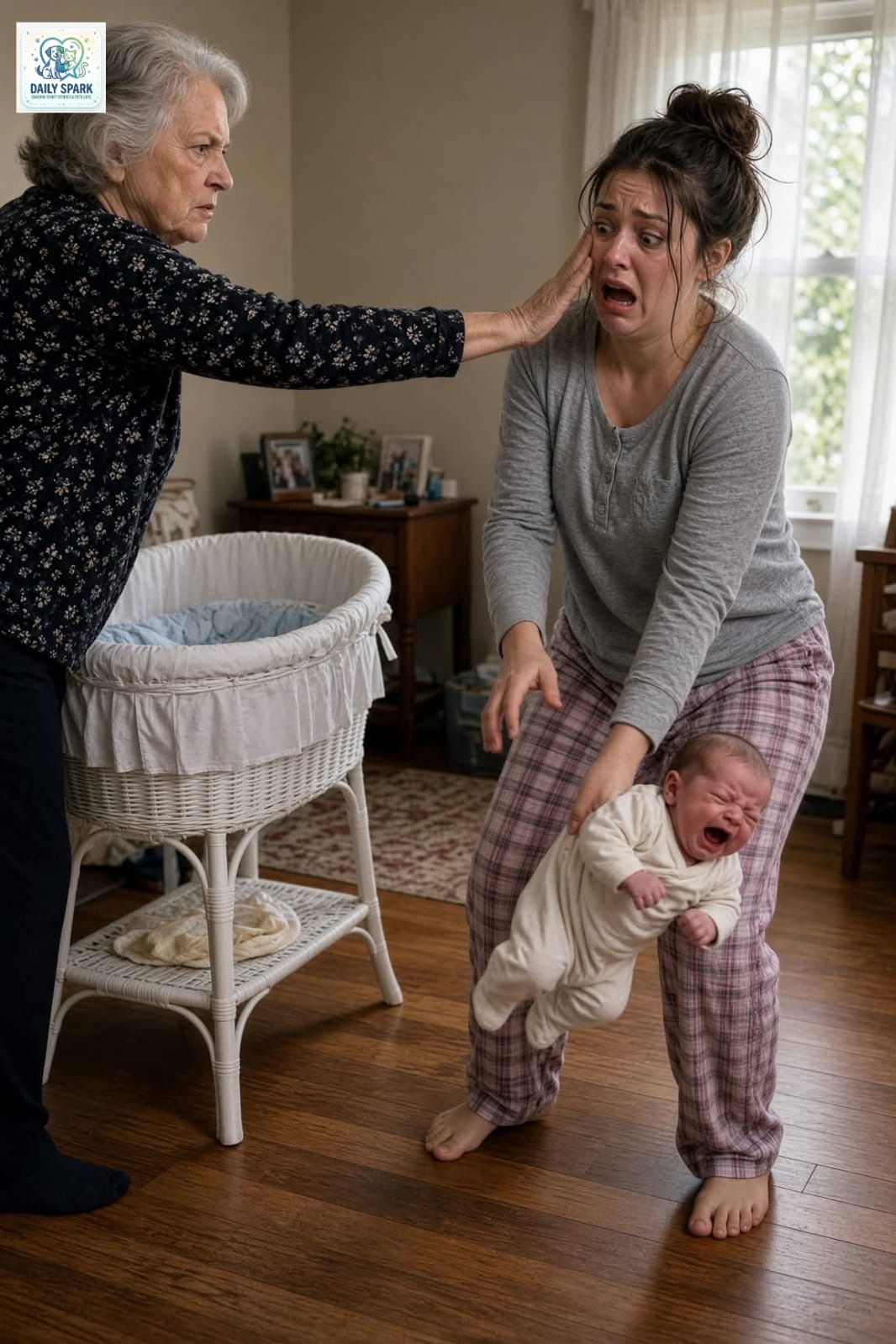
My mother-in-law slapped me so hard my cheek burned, and my 12-day-old daughter slipped from my arms onto the hardwood. Linda stared at the screaming baby and snapped, “Make her stop crying or get out.” Two hours later, the ER doctor studied the CT scan, then turned to the nurse. “Call the police now.”
The nurse quietly shut the exam-room door while I sat beside Ava’s hospital crib with an ice pack against my face. My hands were still shaking badly enough that I had to grip the chair whenever I stood.
Ava had a small skull fracture and a thin bleed the doctor said needed close monitoring. He wouldn’t promise me anything beyond, “Right now, she’s stable, and we’re watching her carefully.”
I had delivered by C-section less than two weeks earlier. My husband, Daniel, had convinced me to recover at his mother’s house because her downstairs guest room meant I wouldn’t have to climb the stairs to our apartment.
Linda had called it helping.
By day four, helping meant correcting how I held Ava, how long I fed her, how quickly I responded when she cried, and even how much milk she thought I should be producing.
Daniel kept saying his mother was intense because she cared.
That afternoon, he was at work when Ava started crying after a feeding. I was walking her beside the bassinet when Linda came into the guest room and ordered me to hand her over.
I said no.
Linda stepped closer. “You’re making her nervous.”
“She’s twelve days old,” I said. “She’s tired.”
Linda reached for Ava anyway. I turned my shoulder so she couldn’t take her from me.
That was when she slapped me.
I remembered the sound before I remembered the pain.
My head snapped sideways. My arms loosened for one horrible second, and Ava slid against my forearm before falling onto the hardwood beside my feet.
She screamed immediately.
I dropped to my knees, but Linda didn’t reach for her. She stood above us staring, almost as if she were calculating what had just happened.
Then she said the sentence I couldn’t get out of my head.
“Make her stop crying or get out.”
I scooped Ava up, grabbed my diaper bag, and left without shoes. I drove straight to the emergency room with one hand gripping the steering wheel and the other hovering uselessly beside her car seat.
Daniel arrived twenty minutes after the doctor ordered the CT.
He walked into the room looking frightened, but the first words out of his mouth were, “Mom said you dropped Ava.”
I stared at him.
“She called me,” he continued. “She said you were overwhelmed, you started yelling, and then you lost control of her.”
For several seconds, I couldn’t speak.
Linda hadn’t just watched my baby hit the floor and refused to help. Before I even reached the hospital, she had started building another version of what happened.
“I didn’t lose control,” I said. “Your mother hit me while I was holding her.”
Daniel looked at the red swelling across my cheek.
“She slapped you?”
“Yes.”
His expression changed, but not enough for me to feel safe.
“She says you’ve been emotional since the birth.”
That sentence hurt almost as much as the slap.
The doctor returned before I could answer. He looked at Daniel, then at me, and asked us both to sit down.
He explained Ava’s injuries carefully. Then he said that because she was a newborn with a head injury following a reported assault, the hospital social worker and law enforcement needed to document exactly what happened.
Linda had already given Daniel a story in which I was the danger.
Now I understood why the doctor’s words terrified me almost as much as the scan.
A hospital social worker named Marissa came in with a police officer. She didn’t accuse me of anything. She simply asked me to describe the afternoon from the beginning without Daniel answering for me.
I told her everything.
When I finished, Daniel pulled out his phone.
“My mother sent me this.”
Linda’s text said: SHE WAS SCREAMING AT THE BABY. I WALKED IN RIGHT AFTER SHE DROPPED HER. SHE NEEDS HELP BEFORE SOMETHING WORSE HAPPENS.
My stomach turned.
The officer read it twice.
“You said Linda was already in the room before the baby fell?”
“Yes.”
“She says she walked in afterward.”
“Yes.”
That was the first concrete contradiction anyone had found.
Then Marissa asked whether anyone else had been inside the house.
“No.”
“Any cameras?” the officer asked.
I almost said no.
Then I remembered the small nursery camera Daniel had mounted above the guest-room bassinet three days after we brought Ava home. He wanted to check on her from work without calling and waking us.
I hadn’t thought about it once since the ambulance-level panic started in my head.
Daniel looked at me at the same moment.
“The baby camera,” he said.
I grabbed my phone.
The app required a password I suddenly couldn’t remember. My fingers kept hitting the wrong keys until Daniel reached toward me.
I pulled the phone away.
“I can do it.”
On the third attempt, the app opened.
There were dozens of short clips triggered by crying and movement. Most were me feeding Ava or walking past the bassinet at night.
Then I saw the timestamp.
2:17 p.m.
The fall had happened only minutes later.
I tapped the clip, but before it loaded, the officer stopped me.
“Don’t delete, trim, or send anything yet. Let me document the account and the original file first.”
He photographed the screen, wrote down the device information, then asked me to open the clip again while he recording the process with his body camera.
The thumbnail appeared.
I could see myself standing beside the bassinet with Ava against my chest.
And behind me, clearly visible in the doorway, was Linda.
That alone destroyed one part of her text to Daniel.
She had not walked in after Ava fell.
She had already been in the room.
The officer leaned closer.
“How long is this recording?”
“Six minutes and fourteen seconds.”
Daniel stopped breathing beside me.
Because six minutes covered everything.
The officer touched the play button.
And Linda’s voice came through the phone’s small speaker, filling the quiet room with the unedited, undeniable truth. Every harsh demand, the sound of the cruel slap, the sickening thud of my baby hitting the floor, and her freezing cold command to make her stop crying or get out echoed off the hospital walls.
Daniel collapsed into the chair, the color entirely draining from his face as the absolute horror of what his mother had done—and what he had almost believed—crushed him completely. The officer looked away from the screen and locked eyes with Daniel, his hand resting firmly on his utility belt.
Within the hour, local authorities arrived at Linda’s home to place her under arrest for assault and child endangerment. Standing beside Ava’s crib as she safely rested, wrapped in warmth and under the watchful care of the medical team, I felt the heavy chains of intimidation finally break away. Daniel stood quietly by the door, tears in his eyes, realizing he had almost lost everything to his mother’s toxicity. But we were finally free, and our real life together could finally begin.




Leave a Reply