My family laughed when I told them I was starting my own company. Three years later, I received a call from the same people asking me for a favor.
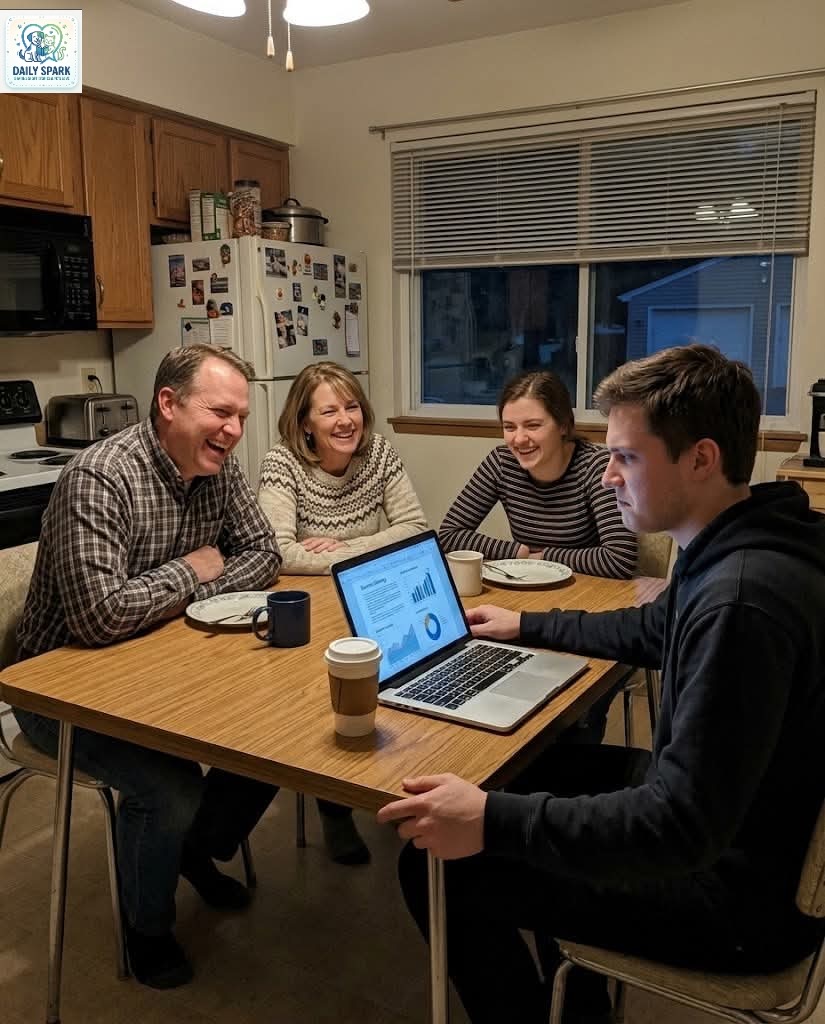
I still remembered the night I told them. We were sitting around my parents’ kitchen table, and I had my laptop open beside a paper coffee cup that had already gone cold.
They laughed at the business plan. They laughed at the amount I had saved. They laughed when I said I was leaving a steady paycheck to build something of my own.
My brother leaned back and said, “Call me when it pays your mortgage.”
Everybody thought that was hilarious.
I didn’t argue.
I worked weekends. I learned sales. I learned payroll. I made mistakes that cost me sleep, money, and more than a few friendships, but the company kept growing.
Three years later, I had employees depending on me, customers who knew my name, and enough stability that I no longer checked my bank balance before buying groceries.
I never called my family to brag.
Then my mother called me.
Her voice was unusually careful. “We need a favor.”
My brother’s business was struggling, she explained. He needed financing fast, and the lender wanted a stronger guarantor. My parents wanted me to put my company behind a $93,700 loan.
For a second, I thought I had misunderstood her.
“You want my company to guarantee his loan?”
“It’s temporary,” she said. “Family helps family.”
There it was.
Three years earlier, my company had been a joke. Now it was apparently family.
I told her to send me everything they expected me to sign.
She didn’t.
Instead, my father called the next morning and asked me to come over Sunday. He said paperwork was easier to explain in person.
When I walked into that same kitchen, the old table was covered with folders instead of dinner plates. My brother sat on one side. My parents sat together on the other.
My brother pushed a pen toward me.
“Seriously,” he said. “This is just a signature.”
I left the pen where it was.
I started reading.
The first thing I noticed was that they weren’t asking me to guarantee the loan personally. The draft listed my company as the guarantor.
The second thing was an email printed behind it. The lender had written that my family had already confirmed I was prepared to sign.
The email was time-stamped 8:43 that morning.
I looked at my mother. “You told them I agreed?”
She folded her hands. “We told them you were coming to discuss it.”
“That isn’t what this says.”
My father leaned forward. “Why are you making this difficult? You can afford to help.”
I looked at my brother.
He wouldn’t look back.
That bothered me more than the paperwork.
So I asked the question nobody seemed prepared for.
“How much of the $93,700 actually keeps his business operating?”
My brother finally looked up. “What difference does that make?”
“A big one.”
I told them I would consider paying verified employee wages and overdue supplier bills directly. No blank check. No company guarantee. No money disappearing into an account I couldn’t track.
My father’s jaw tightened.
My mother said, “That isn’t the help we asked for.”
“No,” I said. “It’s the help I’m willing to give.”
My brother shoved his chair back. “So you get successful and suddenly you think you’re better than us?”
I almost laughed at the irony, but I didn’t.
“I’m protecting the company you all told me would fail.”
That was when my mother looked at my father.
Not angry. Nervous.
I noticed another envelope underneath her purse.
I asked again, “How much of this loan is actually for his business?”
She hesitated, then said quietly, “Not all of it.”
My brother stared at her.
Apparently, that part was new to him too.
I turned my phone around and showed them the email I had drafted offering direct payment for the legitimate business expenses. “If this is really about keeping his company alive, send me the bills. I’ll decide what I can cover.”
Nobody reached for the phone.
Then my mother pulled the second envelope from beneath her purse and slid it across the table toward me.
Inside the envelope was not a business invoice, but a final foreclosure notice bearing my parents’ names.
The $93,700 wasn’t just for my brother’s struggling venture. It was the total sum needed to bail out their home, clear my brother’s mounting debts, and rescue the lifestyle they had spent years pretending was secure.
The silence in the kitchen grew heavy, suffocatingly dense. The old linoleum floor, the faded floral wallpaper, the smell of burnt toast—it all felt like a stage set where the actors had finally run out of script.
My mother looked down at her hands, her carefully manicured fingers trembling slightly. “We had to save the house, Caleb,” she whispered, the tough, defensive facade entirely crumbling. “Everything we have is tied up in it. If we lose the property, we lose our retirement, our dignity… everything.”
My brother looked sick. He hadn’t known the full depth of the financial quicksand our parents had dragged him into, nor how desperately they had planned to use my success to dig them out.
I looked at the foreclosure notice, then at the pen resting beside the blank company guarantee.
If I signed it, my company—the business I had bled for, sacrificed sleep for, and built with my bare hands—would be instantly chained to their reckless choices. One bad quarter, one miscalculated risk, and everything I owned would belong to a lender who didn’t care about family loyalty.
I slid the envelope back across the table, right where it belonged.
“I can’t sign this,” I said, my voice steady and quiet. “And I can’t pay off the debts attached to the house.”
My father slammed his hand on the table, the old wood rattling under the force. “After everything we did for you? We raised you, we fed you—!”
“You laughed at me,” I interrupted, the words cutting through his anger like glass. “You told me to call when it pays my mortgage. Well, it pays my mortgage now. And it pays the salaries of twenty people who depend on me every single day. I will not gamble their livelihoods to bail out mistakes you refused to admit were happening.”
I stood up, pushing my chair back.
“If you send me the actual supplier bills for my brother’s active inventory, my offer still stands. I will help him keep his storefront open. But the house, and the rest of it… you have to face reality.”
Nobody spoke as I walked out of the kitchen.
The drive home was quiet, save for the hum of the highway and the steady rhythm of my own breathing. When I walked through my front door, I dropped my keys on the counter and looked around my apartment—clean, stable, and built entirely on my own terms.
My phone buzzed on the counter. It was a text from my sister, who lived out of state and had been left entirely out of the family drama.
“Heard about what happened at Mom and Dad’s. Are you holding up?”
I typed back a simple reply:
“I’m doing just fine. The company is safe.”
For the first time in three years, I didn’t feel the phantom weight of their approval on my shoulders. I poured a glass of water, sat down at my desk, and opened my laptop. There was work to do, and for the first time, the future looked entirely my own.

Leave a Reply