My parents left my six-year-old daughter by herself at home while they took my sister’s kids to the beach for an entire week. When I asked them to explain, my mother casually said, “She didn’t fit in the truck.” I didn’t shout or start an argument. I picked up my daughter, made one silent choice, and walked away. By the following morning, they understood the truth—I no longer belonged in that family, and they no longer belonged in the house I had been paying for…
Mia had been counting down to Grandchildren Week with purple Xs on the calendar beside our refrigerator.
She packed two stuffed animals, three picture books, her moon-shaped night-light, and eleven crayons. The red one had snapped in half, and according to Mia, that meant both pieces still counted.
My parents lived outside San Antonio in the brick house where I grew up. Every summer, Mia spent a few days there with her cousins while my husband, Andrew, and I handled the busiest stretch at our design studio.
When we arrived, Mom opened her arms. “There’s my favorite girl.”
Then she looked at me. “You look tired, Paula. Go enjoy your week. She’s completely safe here.”
I wanted to believe her.
My parents loved cheerful family photos and posts about being devoted grandparents. My sister Marissa’s children were usually centered in every picture. Mia was the quiet kid near the edge.
Mom always called her “easy.”
I knew that word. I had been the easy daughter too. It meant everyone assumed you would adjust when someone else got more attention.
Still, Mia adored her cousins. She ran toward the backyard sprinkler before I had finished unloading her suitcase, so I swallowed the uneasy feeling and left.
That first night, I called from our Dallas hotel.
“We made cookies,” Mia told me.
She sounded happy.
The next afternoon, nobody answered.
I called Mom. Dad. Marissa. Mia’s watch.
Nothing.
At dinner, a new family post appeared on my phone. My parents, Marissa, her husband, and their two kids were smiling aboard a charter boat near South Padre Island.
The caption read: Family trip at last. Everyone together.
Mia wasn’t in a single photo.
I enlarged every picture until their faces blurred. No braids. No pink swimsuit. No six-year-old tucked behind an adult.
My mother finally answered with wind roaring through the phone.
“Where is Mia?”
“At the house.”
My stomach dropped. “You’re at the coast, and my daughter is at your house?”
“Paula, don’t start.”
“Who is staying with her?”
“She has food. The doors are locked. A neighbor will check in.”
“What neighbor?”
“The woman with the dogs.”
“What is her name?”
Mom sighed. “I don’t remember.”
Then she explained that the luggage, coolers, and beach supplies had filled the truck.
“She didn’t fit.”
Andrew was already closing his laptop.
I ended the call and phoned my grandmother Evelyn, who lived twenty minutes from my parents.
“She’s six,” Grandma said.
“I know.”
I heard her keys moving across the table. “I’m leaving now.”
The next twenty minutes stretched forever. Mia’s watch dropped to one percent and went offline while Andrew searched flights and I paced the hotel room imagining every sound a frightened little girl might hear in an empty house.
Finally, Grandma called.
“I found her.”
My knees nearly gave out.
“She’s behind the sofa. Every light in the house is on.”
Then Mia came onto the phone.
“Mommy, are you coming?”
“We’re leaving now.”
“Did they forget me?”
I covered my mouth. “They made a very wrong decision, sweetheart.”
“They said the truck was full.”
“You are never something that gets left because a truck is full.”
We took the earliest flight and rented a car at the airport. The studio, deadlines, every unfinished project—none of it mattered anymore.
Grandma opened the front door before we reached the porch.
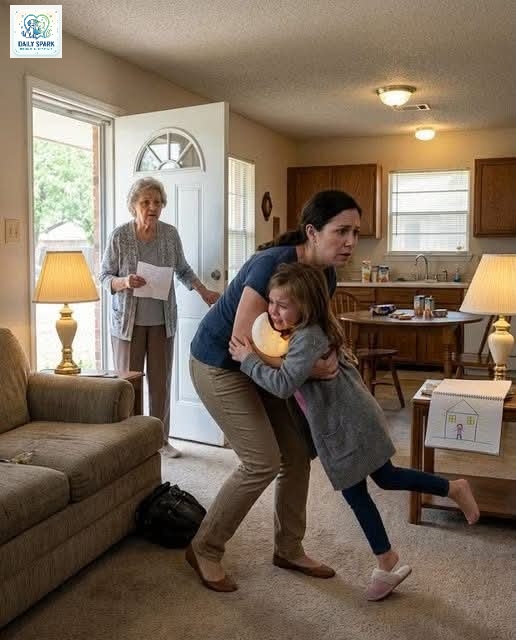
Mia sat on the sofa beneath Grandma’s gray cardigan, clutching her moon light. The second she saw me, she ran so fast one slipper came off.
I picked her up. Her heart hammered against my chest.
“Are you staying all night?”
“Yes.”
“Promise?”
“I promise.”
The house told the rest of the story. Cracker wrappers covered the kitchen table. Empty juice boxes sat beside the sink. Mia’s drawing notebook was open beneath a lamp.
On the page, she had drawn a tiny person inside a square house, with yellow lines shining from every window.
“I left the lights on so you could find me,” she said.
Grandma walked over, unfolded a note written in my mother’s handwriting, and placed it in my hand.
My mother had left it on the kitchen counter beside a twenty-dollar bill and a half-empty box of cereal: “Paula, don’t make a scene. She’s fine for a few days, and Marissa’s kids needed the trip more. We’ll be back Sunday.”
I stared at the ink. Twenty dollars. That was the price tag she put on leaving a six-year-old alone in an empty house while they went on vacation.
I didn’t yell. I didn’t smash anything. I simply folded the note, slipped it into my pocket, and carried Mia out to the rental car.
Grandma Evelyn walked us to the driveway, leaning on her cane. “What are you going to do, Paula?”
“What I should have done years ago,” I said softly.
We drove straight to my parents’ house. The place was dark, lifeless, and locked tight. But the mortgage, the property taxes, and the insurance didn’t belong to them—they belonged to me. Five years earlier, when my father’s business tanked, Andrew and I had bought the house outright, put it entirely in my name, and let them live there rent-free under the agreement that they would always be a safe haven for our family.
It was no longer safe.
I didn’t pack their bags. I didn’t even go inside. I simply sat in the driver’s seat, pulled out my laptop, and emailed our family real estate attorney.
“Revoke the occupancy
agreement effective immediately. Issue a formal thirty-day notice to vacate. Change the locks first thing in the morning.”
By sunrise, the digital locks on the front door had been deactivated and replaced, and an official legal notice was taped securely to the front glass.
I took Mia back to Dallas, settled her into her own bed, and turned off my phone.
The digital explosion started at 8:00 a.m.
My family group chat went wild with panic. My mother called thirty times in a row. Marissa sent panicked voice notes screaming about how they had nowhere to go when they drove back from the coast, and my father tried the tough-guy route, demanding to know by what right I had locked them out of “their” home.
Finally, I picked up.
“You locked us out!” my mother shrieked the second the line connected. “Where are supposed to live? How could you do this to your own parents over a little mistake?”
“A little mistake?” My voice was colder and calmer than I had ever heard it. “You abandoned my six-year-old child alone in an empty house because she didn’t fit in your truck. You left twenty dollars for a week of survival. And the house was never yours—it was mine. Every brick, every wall, every month of rent you never had to pay.”
Silence stretched across the line, heavy and stunned.
“You’re really kicking us out?” my father whispered, the anger instantly draining out of his voice.
“You made your choice about who matters in this family,” I said. “And I made mine.”
I hung up the phone and blocked every single one of them.
Two weeks later, the house was empty, our attorney handled the keys, and the lingering echoes of my parents’ conditional love were gone for good. That weekend, Mia and I sat on our back porch under the warm Texas sun, painting a brand-new wooden birdhouse pink and purple.
She held up the red crayon—still broken in half—and smiled. “Look, Mom. Both pieces still count.”
I kissed the top of her head, completely at peace. She was safe, she was loved, and she would never, ever be left behind.

Leave a Reply