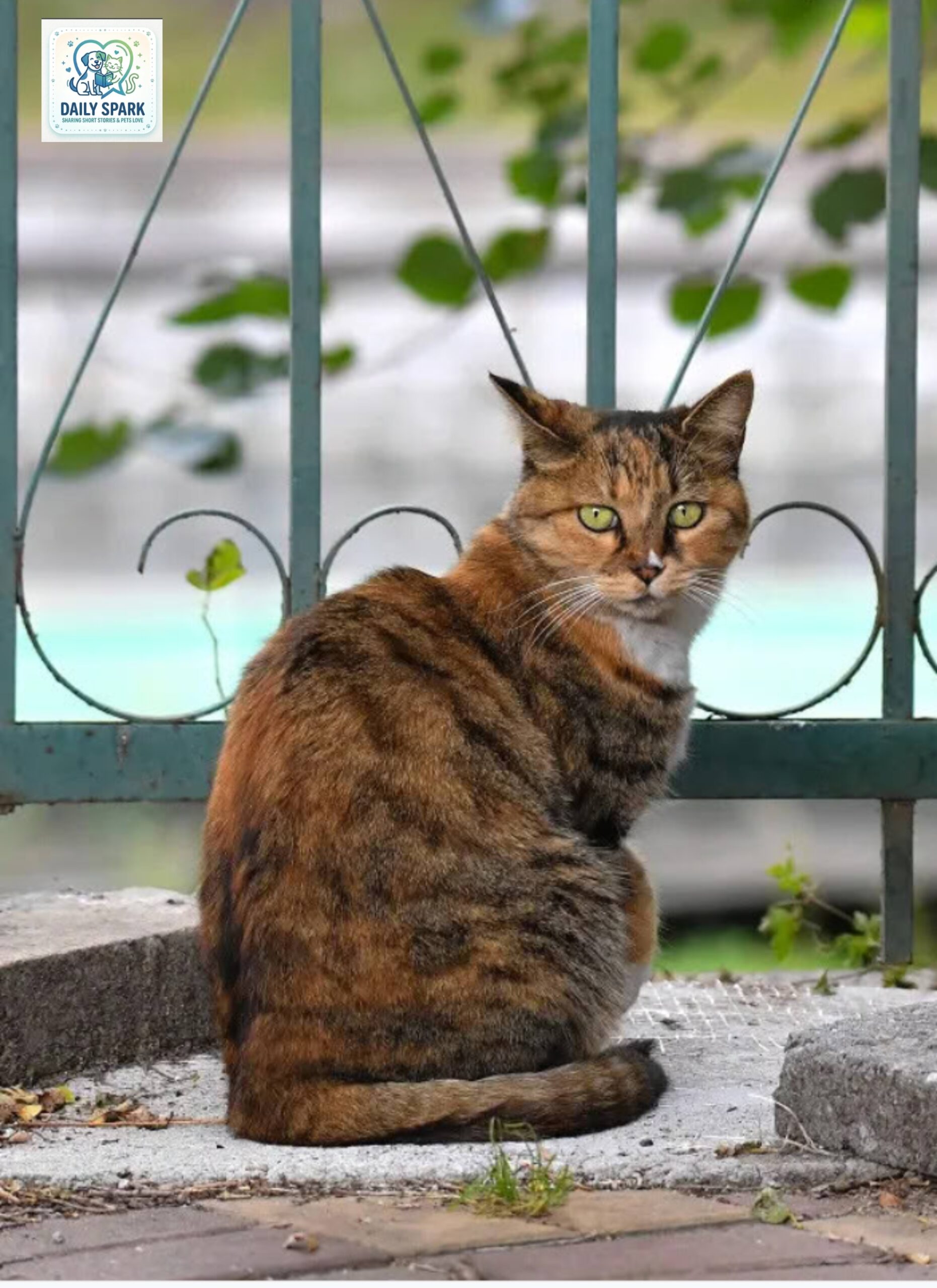
Meet Luna. She isn’t just any cat; she’s a survivor. This striking calico tabby, with eyes the color of newly minted spring leaves, is a familiar fixture on the cobblestone path leading to her favorite green wrought-iron gate.
Luna didn’t always rule this patch of sidewalk. A year ago, she was a “Community Cat” or, as many call them in the US, a feral cat. She was thin, wary, and had a litter of kittens in the cold dampness beneath a nearby apartment stoop. That’s when a local resident named Sarah noticed her.
Using the “Trap-Neuter-Return” (TNR) method—a humane and effective practice gaining huge traction across American cities—Sarah humanely trapped Luna, had her spayed and vaccinated, and then released her back into the territory she knew and loved.
Since then, Luna’s life has transformed. She gained weight, her coat grew thick and glossy, and Sarah (now her primary caretaker) built her a cozy, insulated shelter for the harsh American winters. She no longer has to endure the cycle of endless litters.
Why is Luna sitting here by this ornate gate? It’s her way of saying “thank you.” This gate belongs to a garden where many local songbirds love to rest. In her previous life, Luna would have hunted them for survival. Now, sterilized and well-fed, she sits regally on the concrete ledge, no longer a threat to the birds but a silent, green-eyed guardian. She watches them flit and play, content in her retirement.
Luna is a testament to the power of community compassion. She shows that even cats who have lived on the streets can become beloved neighbors, contributing to the ecosystem of a city without being a nuisance. She’s living proof that TNR works, allowing cats to live out their lives with dignity, safety, and full bellies.
………..,……….



Leave a Reply