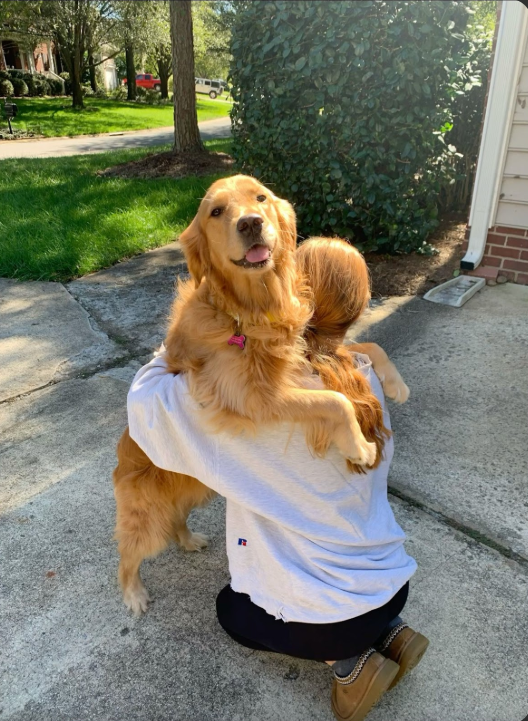
Rusty was fourteen years old, which in dog years made him ancient, and in human grief made him precious beyond measure.
He’d gone mostly blind the year before. His hips gave out on stairs. But every morning at 6 AM, he still dragged himself to the front door and lay down next to a pair of old work boots — the same boots his owner, Daniel, used to wear every day before the accident.
Daniel had been gone eight months now. A drunk driver, a hospital, a funeral. The kind of loss that hollows out a house.
Daniel’s wife, Ellen, hadn’t touched his boots since the funeral. She couldn’t. But she noticed Rusty had claimed them — not chewed, not dragged around, just… guarded. He’d rest his graying muzzle against the leather like he was still waiting for feet to fill them.
One morning, Ellen came downstairs to find Rusty hadn’t made it to the boots. He was on the kitchen floor instead, breathing shallow, his back legs no longer cooperating.
She sat down next to him. Right there on the cold tile, she pulled him into her lap the way she used to when he was a puppy, when Daniel would laugh and say he was too big for that now.
“He’s not coming back, Rusty,” she whispered, the first time she’d said it out loud to anyone. “I know you’re still waiting. I am too.”
Rusty licked her wrist, once, weakly.
She carried the boots to him herself that day — something she thought she’d never be able to do — and set them beside his bed. He pressed his nose into them and, for the first time in months, his tail thumped against the floor. Slow. Tired. But there.
He lived four more months after that. Ellen says those were the months she finally started grieving properly — because a dog too loyal to let go taught her that love doesn’t need you to be ready. It just needs you to show up.




Leave a Reply